
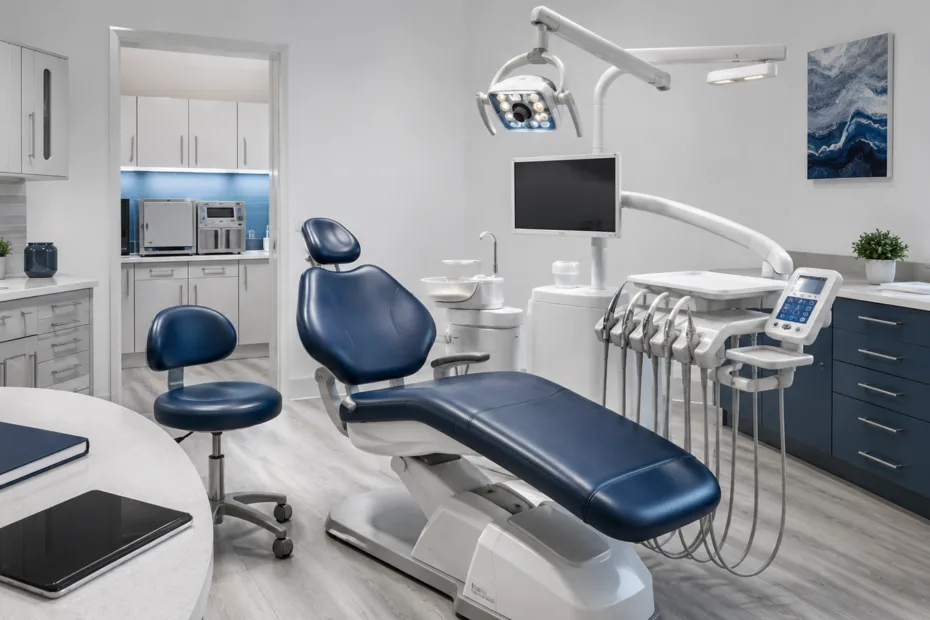
Selecting dental equipment is one of the largest and most important investments a dental-practice owner will make. The equipment you choose affects patient comfort, clinical efficiency, staff workflow, maintenance expenses, and the services your practice can provide.
Whether you are opening your first dental practice, expanding an existing office, or replacing aging equipment, the process can quickly become overwhelming. Dental chairs, delivery systems, sterilizers, compressors, vacuums, X-ray equipment, cabinetry, and smaller clinical devices must all work together within the available space and infrastructure.
This dental equipment guide explains the major equipment categories, what to evaluate before purchasing, and how new, pre-owned, and refurbished equipment can be combined to create a dependable dental office without unnecessarily exceeding your budget.
Begin With Your Practice Plan
Equipment decisions should begin with the way your practice will operate—not with a catalog or a particular brand.
Before requesting quotes, consider:
- The number of operatories you need initially
- The number of operatories you may add later
- The dental services you plan to provide
- Your expected patient volume
- Whether rooms will be dedicated or used for multiple procedures
- Your preferred doctor and assistant workflow
- Available electrical, plumbing, air, vacuum, and data connections
- Installation requirements
- Your opening or renovation schedule
- Your total equipment and construction budget
A general dental practice may have different equipment needs than an orthodontic, pediatric, surgical, endodontic, or hygiene-focused office. Planning around your actual procedures helps prevent you from purchasing equipment that is either insufficient or unnecessarily complex.
The American Dental Association also recommends accounting for matters such as zoning, permits, legal requirements, financing, and other business decisions when establishing a new practice. Reviewing the ADA’s starting-a-dental-practice resources can help you identify planning considerations outside the equipment itself.
Essential Dental Operatory Equipment
The patient operatory is where comfort, ergonomics, and clinical workflow come together. Each room should be planned as a complete working system rather than a collection of unrelated products.
Dental Chair
The dental chair is the centerpiece of the operatory. Important considerations include:
- Height range
- Smoothness of movement
- Patient weight capacity
- Backrest design
- Headrest adjustability
- Armrest configuration
- Swivel capability
- Emergency-stop features
- Foot control or touchpad operation
- Upholstery condition
- Availability of replacement parts
- Compatibility with delivery systems and lights
The chair should position patients comfortably while allowing the dentist and assistant to work without unnecessary reaching, twisting, or repositioning.
Custom upholstery can also help coordinate equipment with the office design. A quality chair with worn upholstery may still be an excellent candidate for refurbishment when its mechanical and structural components remain in good condition.
Doctor Delivery System
The delivery system organizes the instruments and controls used by the dentist. Depending on the configuration, it may include:
- Air-driven handpiece connections
- Electric handpiece controls
- Air/water syringe
- Control block
- Instrument tray
- Touchpad
- Clean-water bottle
- Wet or dry foot control
- Additional accessory connections
Delivery systems are commonly mounted to the chair, cabinet, wall, or mobile cart. The best configuration depends on room size, doctor positioning, assistant access, and whether the room needs to support left- and right-handed clinicians.
Assistant’s Instrumentation
An assistant’s package commonly includes high-volume evacuation, saliva ejector, air/water syringe, and holder assemblies. It may be mounted to the chair, delivery system, cabinet, or a separate arm.
The position should provide easy access without obstructing the patient or interfering with the doctor’s movement.
Dental Light
A properly positioned dental light improves visibility and helps reduce the need for awkward clinician positioning. Consider:
- Light intensity
- Color quality
- Movement range
- Handle placement
- Shadow control
- Mounting style
- Compatibility with the chair or ceiling structure
- Availability of replacement bulbs or components
Available configurations may include chair-mounted, post-mounted, cabinet-mounted, wall-mounted, and ceiling-mounted lights.
Doctor and Assistant Stools
Stools are sometimes treated as an afterthought, but they can have a major effect on daily comfort and posture. Look for adjustable seat height, lumbar or torso support, stable casters, durable upholstery, and a design suited to the user’s preferred working position.
Sterilization and Instrument Processing Equipment
The sterilization area should support a clear flow from contaminated instruments to cleaned, packaged, sterilized, and stored instruments.
Common equipment includes:
- Ultrasonic cleaners
- Instrument washers
- Drying areas
- Packaging stations
- Autoclaves and sterilizers
- Storage cabinets
- Water-treatment systems
- Biological monitoring supplies
- Instrument cassettes
Capacity matters. A sterilizer that is appropriate for a small practice may create delays as patient volume increases. Consider chamber size, cycle time, instrument volume, available counter space, electrical requirements, water requirements, service support, and documentation features.
The CDC recommends cleaning and reprocessing reusable dental devices according to the manufacturer’s instructions. Most heat-tolerant patient-care items should be heat sterilized using the specified time, temperature, packaging, and monitoring procedures. Review the CDC’s current dental sterilization guidance when designing your instrument-processing workflow.
Dental X-Ray and Imaging Equipment
Imaging equipment may include:
- Intraoral X-ray units
- Handheld X-ray units
- Digital sensors
- Phosphor plate systems
- Panoramic systems
- Cephalometric systems
- Cone-beam computed tomography systems
- Intraoral cameras
- Imaging workstations and monitors
Before purchasing an imaging system, consider the procedures you perform, image quality, sensor sizes, software compatibility, network requirements, training, warranty coverage, and future upgrade options.
Room layout and regulatory requirements also matter. State and local rules may address registration, shielding, inspections, operator qualifications, and equipment use. The FDA notes that many states regulate X-ray equipment under their own radiation-control requirements, so practices should verify the rules that apply in their location. More information is available through the FDA’s dental radiography resources.
Mechanical-Room Equipment
The mechanical room supports nearly every treatment room in the practice. Undersizing this equipment can limit performance, while poor planning can lead to noise, heat, moisture, and maintenance problems.
Dental Air Compressor
A dental compressor supplies clean, dry air to handpieces, syringes, and other equipment. Consider:
- Number of supported users
- Airflow and pressure
- Tank capacity
- Oil-free operation
- Drying system
- Noise level
- Ventilation requirements
- Service accessibility
- Plans for future operatories
Dental Vacuum System
The vacuum system powers high-volume evacuation and saliva-ejection equipment. Important factors include:
- Wet-ring or dry-vacuum design
- Number of simultaneous users
- Available plumbing
- Water consumption
- Electrical requirements
- Noise and heat
- Maintenance needs
- Expansion capacity
Amalgam Separator
Dental offices that place or remove amalgam may be subject to federal, state, and local requirements. The EPA states that affected dental offices must properly operate and maintain an amalgam separator and follow restrictions concerning scrap amalgam and certain line cleaners. Practices should review the EPA’s dental-effluent requirements and consult their local control authority.
A mechanical-room assessment should be completed before equipment is ordered. Confirm the number of operatories, pipe sizes, electrical service, drainage, ventilation, available floor space, and future expansion plans.
Dental Cabinets and Office Layout
Cabinetry affects how supplies, instruments, technology, and equipment move through the practice. Well-planned cabinetry can reduce unnecessary steps and make rooms easier to clean and restock.
Common cabinetry includes:
- Rear treatment consoles
- Side cabinets
- Sterilization centers
- Mobile carts
- X-ray storage cabinets
- Laboratory cabinets
- Central supply storage
- Reception and business-office cabinetry
Measure carefully and account for doors, drawers, plumbing, electrical outlets, equipment arms, chair movement, wheelchair access, and staff circulation.
Whenever possible, finalize the equipment layout before plumbing and electrical work is completed. Moving utilities later can create delays and additional construction costs.
Small Dental and Laboratory Equipment
Small equipment may represent a smaller individual investment, but these devices are essential to everyday workflow.
Examples include:
- Curing lights
- Ultrasonic scalers
- Handpieces
- Amalgamators
- Model trimmers
- Vacuum-forming machines
- Laboratory lathes
- Mixing units
- Dust collectors
- Intraoral cameras
- Portable delivery units
- Mobile carts and instrument stands
Review electrical requirements, consumable availability, reprocessing instructions, replacement parts, and whether the equipment integrates with your existing systems.
For removable dental handpieces and similar intraoral instruments, the CDC recommends cleaning and heat sterilizing the device between patients according to validated manufacturer instructions. Review the CDC’s dental-handpiece guidance before selecting or placing these devices into service.
New, Pre-Owned, or Refurbished Dental Equipment?
Practices do not have to purchase every item in the same condition category. A blended equipment strategy can help direct more of the budget toward the areas that provide the greatest clinical or operational value.
New Dental Equipment
New equipment may offer:
- Current technology
- Manufacturer warranty coverage
- More customization options
- Current software compatibility
- Easier access to manufacturer support
- Longer expected service life
It may be the preferred choice for technology-dependent products, specialized clinical devices, or situations where manufacturer integration is especially important.
Pre-Owned Dental Equipment
Pre-owned equipment is previously used equipment offered in its existing condition. It can be a practical choice when:
- The item is structurally sound
- Its history and condition are clearly represented
- Replacement parts remain available
- The buyer understands what has and has not been tested
- Cosmetic wear is acceptable
- The savings justify any future service needs
“Pre-owned” should not automatically be interpreted as “refurbished.” Ask the seller exactly what inspection, testing, cleaning, or repairs have been completed.
Refurbished Dental Equipment
Refurbished equipment has typically received additional inspection, service, repairs, cleaning, refinishing, or component replacement. However, refurbishment standards can vary between sellers.
Ask for details about:
- The inspection process
- Components repaired or replaced
- Functional testing
- Paint or refinishing work
- Upholstery replacement
- Included accessories
- Warranty coverage
- Parts availability
- Technical support
- Installation options
A professionally refurbished dental chair or operatory package can provide dependable function and an updated appearance at a lower cost than comparable new equipment.
How to Evaluate Used or Refurbished Equipment
Before purchasing, request enough information to verify both condition and compatibility.
Confirm Identification
Obtain the:
- Manufacturer
- Model number
- Serial number
- Approximate age
- Electrical specifications
- Included accessories
- Previous application
Request Detailed Photographs
Photographs should show:
- All sides of the equipment
- Manufacturer labels
- Connectors
- Controls
- Upholstery
- Mounting points
- Cords and hoses
- Areas of cosmetic or mechanical wear
Ask What Has Been Tested
A motor that powers on has not necessarily been tested under load. A chair that moves may still require inspection for leaks, worn switches, damaged wiring, or intermittent problems.
Ask whether each major function has been tested and whether the equipment is being sold as operational, partially tested, or untested.
Review the Warranty
Confirm:
- Warranty duration
- Whether labor is included
- Whether parts are included
- Geographic limitations
- Who performs authorized service
- Items excluded from coverage
- Whether installation affects coverage
Verify Service and Parts Availability
Older equipment may remain highly serviceable when parts and technical knowledge are available. Other products may become difficult or expensive to maintain after manufacturer support ends.
This is one reason the seller’s experience with the equipment matters.
Calculate the Total Cost of Ownership
The purchase price is only one part of the equipment investment. Your budget should also consider:
- Freight
- Packaging and crating
- Inside delivery
- Installation
- Plumbing and electrical work
- Rigging
- Permits or inspections
- Software licenses
- Computers and networking
- Consumables
- Training
- Preventive maintenance
- Repairs
- Replacement parts
- Upholstery
- Future removal or relocation
A less expensive product can become the more costly option if it requires extensive modifications or lacks serviceable parts. Conversely, dependable refurbished equipment can produce meaningful savings when it is properly matched to the practice and supported after the sale.
Plan for Future Growth
Even if you are opening with only a few treatment rooms, consider what the practice may need during the next three to five years.
Ask:
- Can the compressor and vacuum support more operatories?
- Is there space for another sterilizer?
- Can cabinetry accommodate additional supplies?
- Are electrical and data connections available for future technology?
- Can rooms be converted between hygiene and restorative use?
- Will the delivery configuration work for additional providers?
- Is there room for upgraded imaging equipment?
Planning for expansion during the initial design is usually easier than modifying finished walls, flooring, plumbing, or electrical systems later.
Common Dental Equipment Buying Mistakes
Avoid these frequent problems:
- Purchasing equipment before the room layout is finalized.
- Selecting products based only on price.
- Failing to confirm voltage, plumbing, air, or vacuum requirements.
- Assuming all equipment from the same brand is interchangeable.
- Confusing pre-owned equipment with refurbished equipment.
- Ignoring freight, installation, and construction expenses.
- Buying mechanical-room equipment without calculating simultaneous users.
- Overlooking replacement-part availability.
- Purchasing imaging equipment without verifying software and regulatory requirements.
- Failing to plan for future growth.
- Not documenting model and serial numbers.
- Choosing a supplier without technical support or dental-industry experience.
Dental Equipment Planning Checklist
Before placing an order, confirm:
- Practice type and procedures
- Number of operatories
- Expected patient volume
- Room measurements
- Equipment placement
- Doctor and assistant workflow
- Plumbing requirements
- Electrical requirements
- Air and vacuum requirements
- Data and software requirements
- Local permits and regulations
- Infection-prevention workflow
- Freight and delivery access
- Installation responsibilities
- Warranty coverage
- Parts and service availability
- Future expansion capacity
- Total project budget
- Target completion date
Work With an Experienced Dental Equipment Supplier
The best equipment plan is not necessarily the one containing the most expensive products. It is the one that supports your clinical workflow, fits the facility, protects the budget, and remains serviceable after installation.
Collins Dental Equipment has served dental professionals since 1993. We provide new, pre-owned, and refurbished dental equipment, including dental chairs, delivery systems, lights, stools, sterilizers, X-ray equipment, compressors, vacuums, cabinetry, and complete operatory packages.
Our team can help you:
- Compare equipment options
- Identify compatible components
- Plan complete operatories
- Evaluate new and refurbished choices
- Coordinate custom chair and stool upholstery
- Arrange nationwide freight
- Discuss installation options
- Outfit a new office or upgrade an existing practice
Whether you need one replacement chair or equipment for an entire dental office, Collins Dental Equipment can help you build a practical solution around your space, workflow, and budget.
Start Planning Your Dental Equipment Project
Ready to open, expand, or upgrade your dental practice?
Contact Collins Dental Equipment to discuss your equipment needs, request a quote, or begin planning your project.
Collins Dental Equipment
Established in 1993
Phone: (859) 881-3996
Email: [email protected]
Website: CollinsDentalEquipment.com