
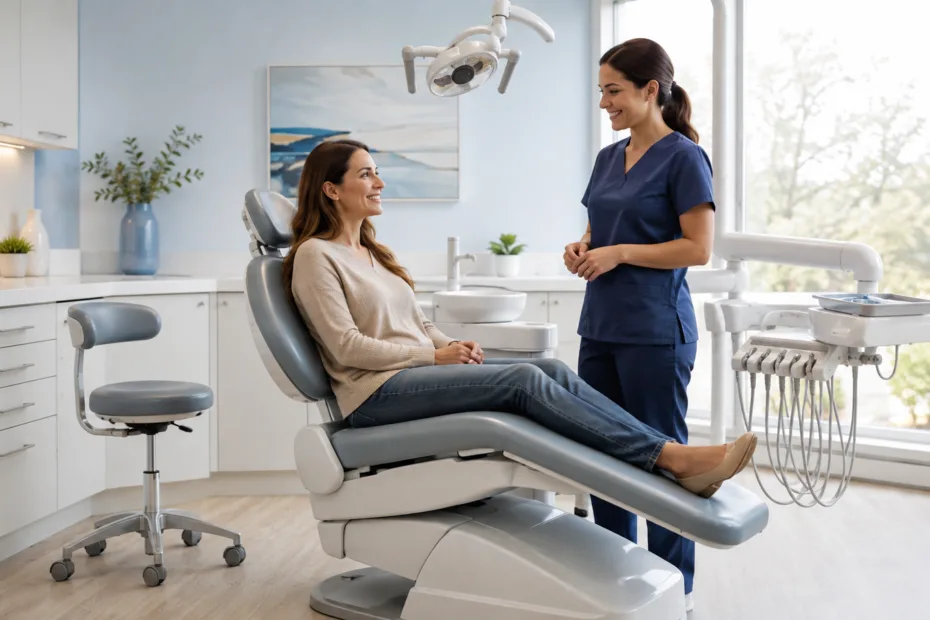
Patients begin forming an opinion of a dental practice before they meet the dentist. The condition of the reception area, organization of the treatment rooms, comfort of the dental chair and appearance of the equipment all contribute to the patient’s first impression.
Clinical skill and quality care remain the foundation of a successful practice. However, the surrounding environment can influence whether patients feel comfortable, confident and willing to return.
Improving the patient experience does not always require constructing a new office or replacing every piece of equipment. Strategic upgrades can help an established practice create a more professional, comfortable and reassuring environment.
Begin With the Patient’s Point of View
Dental professionals become accustomed to their surroundings. Equipment that has gradually faded, upholstery that has slowly worn and storage areas that have become crowded may no longer stand out to the team.
A patient sees the office with fresh eyes.
Walk through the practice as though you were visiting for the first time. Consider what patients experience when they:
- Enter the building
- Approach the reception desk
- Sit in the waiting area
- Walk through hallways
- Enter the operatory
- Sit in the dental chair
- View instruments and equipment
- Speak with the clinical team
- Schedule their next appointment
This exercise can reveal areas that appear cluttered, worn, outdated or confusing.
It can also highlight positive features that should be emphasized, such as organized treatment rooms, comfortable chairs, modern technology and a welcoming team.
Keep the Office Organized
Organization affects both appearance and efficiency.
Crowded countertops, exposed cables, overflowing storage and equipment placed in walkways can make an operatory feel smaller and less controlled. Patients may interpret visible disorder as a reflection of how the practice operates.
An organized treatment room should provide appropriate storage for frequently used supplies while keeping unnecessary items out of view.
Review:
- Countertop storage
- Instrument placement
- Mobile carts
- Computer cables
- Delivery-system tubing
- Patient belongings
- Waste containers
- Supply drawers
- Wall-mounted accessories
- Equipment that is no longer used
Organization should support the clinical workflow rather than simply hide items. Supplies should remain accessible to the team without creating unnecessary visual clutter.
Evaluate the Condition of Your Dental Chairs
The dental chair is one of the most noticeable pieces of equipment in the treatment room. It is also the surface with which the patient has the most direct contact.
A chair may continue operating reliably while showing visible signs of age.
Inspect the upholstery for:
- Cracks
- Tears
- Permanent stains
- Fading
- Separated seams
- Flattened cushioning
- Uneven surfaces
- Material that has become difficult to clean
Worn upholstery can make dependable equipment appear neglected. It may also reduce patient comfort and make cleaning more difficult.
Replacing the upholstery can refresh the appearance of a dental chair without requiring the practice to replace the entire unit. New upholstery also provides an opportunity to coordinate chairs and stools with flooring, cabinetry, paint and office branding.
Before investing in upholstery, have an equipment technician evaluate the chair’s mechanical and structural condition. A dependable chair may be a strong candidate for cosmetic improvement, while an unreliable chair may be better suited for repair, refurbishment or replacement.
Consider Patient Comfort
Patients may remain in the dental chair for a significant amount of time. Their physical comfort can influence how they remember the appointment.
Evaluate:
- Cushion support
- Headrest positioning
- Armrest stability
- Ease of entering and exiting
- Chair movement
- Room temperature
- Lighting
- Noise
- Privacy
- Accommodations for limited mobility
A properly adjusted headrest can improve comfort and positioning. Smooth chair movement can feel more reassuring than a chair that jerks, hesitates or produces unusual noises.
Team members should explain chair movements before repositioning the patient. Clear communication can help reduce uncertainty, particularly for patients who already feel anxious about dental care.
Make Equipment Look Consistent
Practices often purchase equipment over many years. One operatory may contain a newer chair, an older delivery system, mismatched stools and equipment in several colors.
The individual items may work properly, but the room can appear disconnected.
Consistency can be improved through:
- Coordinated upholstery colors
- Matching operator and assistant stools
- New tubing
- Replacement covers
- Equipment painting
- Organized mounting configurations
- Consistent monitor placement
- Standardized accessories
A complete replacement is not always necessary. Refurbishing selected components may help older and newer equipment feel like part of the same office design.
If the practice is updating several operatories, create a simple equipment and color standard. This can guide future purchases and prevent the office from becoming increasingly mismatched.
Address Equipment That Looks Unreliable
Patients may not understand the technical operation of dental equipment, but they notice visible damage and unusual behavior.
Equipment can create concern when it:
- Makes unexpected noises
- Moves unpredictably
- Has cracked covers
- Contains heavily discolored tubing
- Has taped or temporary-looking repairs
- Appears unstable
- Frequently requires staff adjustment
- Interrupts the appointment
Do not hide an operational concern behind cosmetic improvements. Equipment that behaves unpredictably should be inspected by a qualified technician.
Document repeated problems, service calls and downtime. This information can help the practice decide whether continued repair, broader refurbishment or replacement provides the best value.
Use Lighting Carefully
Lighting affects the appearance and atmosphere of the operatory.
The clinical team needs suitable illumination for patient care, while patients may benefit from a softer environment when the treatment light is not in use.
Consider:
- General room lighting
- Natural light
- Dental-light positioning
- Glare on monitors
- Light directed toward the patient’s eyes
- Dark corners
- Color consistency
- Flickering or aging fixtures
Dental lights should move smoothly and remain stable in the selected position. They should also be easy to clean and appropriately positioned for the procedures performed in the room.
Reduce Unnecessary Noise
Mechanical noises can increase anxiety, particularly for patients who already associate dental treatment with unpleasant sounds.
Not every sound can be eliminated, but the office can reduce unnecessary noise by addressing:
- Squeaking chairs
- Vibrating equipment
- Loose covers
- Noisy compressors
- Slamming drawers
- Unbalanced stools
- Equipment alarms
- Loud hallway conversations
Unusual noise may also indicate a developing mechanical problem. Staff should report changes rather than accepting them as a normal part of aging equipment.
Mechanical-room equipment should have appropriate ventilation and service access. If noise has increased, have the compressor or vacuum system evaluated.
Help Patients Understand Your Investment
Equipment upgrades can support marketing when they are presented accurately.
When the practice installs new or refurbished equipment, consider sharing:
- Operatory photographs
- Before-and-after upholstery images
- Information about improved patient comfort
- Explanations of new technology
- Office-renovation progress
- Team training
- Accessibility improvements
Focus on the patient benefit rather than simply announcing a purchase.
For example, explain how a new chair improves comfort and positioning or how an updated delivery system helps the team work more efficiently.
Avoid making clinical or safety claims that cannot be supported. Clear, practical explanations are often more credible than exaggerated promotional language.
Ask the Team for Feedback
Dentists, assistants, hygienists and administrative staff experience the office from different perspectives.
Ask team members:
- Which equipment causes the most frustration?
- Which rooms are difficult to organize?
- Where do patients appear uncomfortable?
- Which chairs are difficult to position?
- What slows room turnover?
- Which surfaces are difficult to clean?
- Where is storage inadequate?
- Which equipment looks noticeably worn?
Team feedback can help the practice prioritize improvements that support both patient experience and daily workflow.
Upgrade in Phases
An office does not need to complete every improvement at once.
A phased plan may begin with:
- Repairing unreliable equipment
- Addressing torn or damaged upholstery
- Improving the busiest operatory
- Coordinating stools and chairs
- Reorganizing supplies and cables
- Updating additional treatment rooms
- Planning larger equipment replacements
Phased upgrades allow the practice to manage expenses while making steady, visible progress.
They also provide an opportunity to evaluate colors, configurations and equipment before repeating the same choices throughout the office.
How Collins Dental Equipment Can Help
Collins Dental Equipment has helped dental professionals improve, expand and equip their practices since 1993.
We provide new, pre-owned and refurbished dental equipment, including:
- Dental chairs
- Delivery systems
- Assistant instrumentation
- Dental lights
- Operator and assistant stools
- Complete operatory packages
- Sterilization equipment
- Mechanical-room equipment
- X-ray equipment
- Supporting dental equipment
Our services include dental equipment refurbishment, custom upholstery, painting, installation and assistance with planning equipment for individual operatories or complete dental offices.
Whether your practice needs new upholstery for a dependable chair or a complete operatory replacement, our team can help you compare options based on your workflow, available space and budget.
Create an Environment Patients Can Trust
Patients may not know the model of your dental chair or the specifications of your delivery system, but they recognize when an office feels comfortable, organized and professionally maintained.
By viewing the practice from the patient’s perspective, addressing visibly worn equipment and making thoughtful upgrades, a dental office can create an environment that supports confidence and long-term relationships.
To discuss equipment or upholstery options for your practice, contact Collins Dental Equipment:
Phone: (859) 881-3996
Email: [email protected]
Website: CollinsDentalEquipment.com