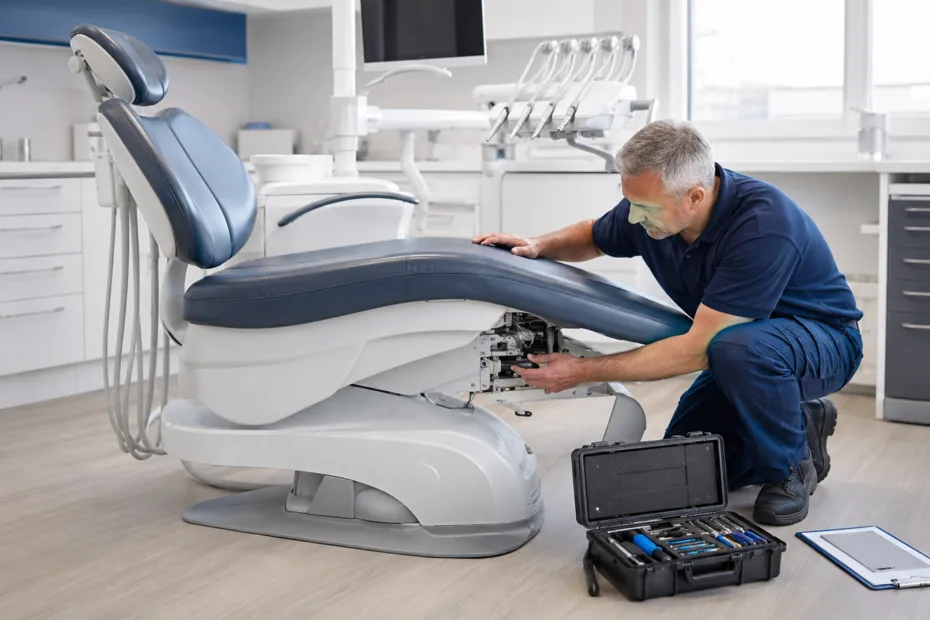
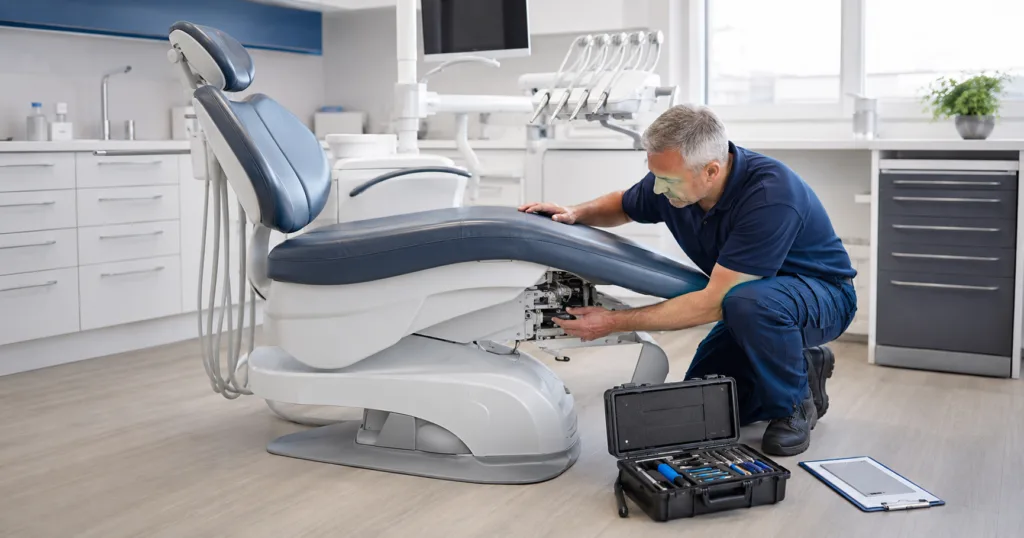
Dental equipment is a major investment, so deciding whether to repair, refurbish, or replace it deserves careful consideration. Although older equipment may show signs of wear, that does not always mean it has reached the end of its useful life. In many cases, professional repairs, updated components, new paint, or replacement upholstery can restore its appearance and functionality.
Other equipment, however, may no longer be reliable, economical, or appropriate for the needs of a growing practice. Understanding the difference can help dentists avoid unnecessary purchases while ensuring their operatories remain efficient, comfortable, and professional.
Begin With the Equipment’s Reliability
Reliability should be one of the first factors you consider. A dental chair, delivery unit, light, sterilizer, compressor, or vacuum system that operates consistently may still be a good candidate for refurbishment.
Occasional maintenance is normal, especially as equipment ages. Repeated failures are a greater concern.
Watch for problems such as:
- Increasingly frequent service calls
- Intermittent operation
- Hydraulic leaks
- Unresponsive chair controls
- Inconsistent delivery-system pressure
- Cracked or leaking tubing
- Flickering or unreliable dental lights
- Unusual noises or vibration
- Difficulty locating replacement parts
- Equipment that interrupts scheduled appointments
Keep a record of repairs, downtime, and service expenses. This makes it easier to determine whether the equipment remains economical to maintain.
Consider the Equipment’s Structural Condition
Cosmetic wear and structural damage are not the same.
Faded paint, worn upholstery, minor surface scratches, and yellowed plastic may affect the appearance of an operatory without preventing the equipment from functioning properly. These concerns can often be addressed through refurbishment.
Structural or mechanical problems require a more detailed evaluation. Inspect the chair base, lift mechanism, backrest, armrests, headrest, mounting points, delivery arms, and other weight-bearing components.
A professional technician should evaluate equipment that feels unstable, moves unexpectedly, has damaged mounting components, or shows evidence of significant corrosion or structural deterioration.
If the core structure remains sound and compatible parts are available, refurbishment may be a practical solution. If important structural components are compromised, replacement may be the safer and more economical choice.
Evaluate the Availability of Replacement Parts
Some dental equipment remains serviceable for many years because replacement parts and trained technicians are readily available. Other models become increasingly difficult to maintain as manufacturers discontinue components.
Before investing in a refurbishment, determine whether common replacement parts are still available, including:
- Hydraulic components
- Circuit boards
- Switches and controls
- Chair motors
- Delivery-system valves
- Handpiece tubing
- Light switches and transformers
- Upholstery cushions
- Armrest and headrest components
- Model-specific mounting hardware
A chair may appear to be a strong refurbishment candidate, but limited parts availability could make future repairs difficult or expensive. An equipment specialist can help identify the manufacturer, model, and likely availability of replacement components.
Determine Whether the Equipment Still Fits Your Workflow
Equipment can remain operational while no longer meeting the needs of the dental team.
A delivery unit may not provide the instrument configuration your clinicians prefer. An older chair may not position patients effectively for the procedures your practice now performs. A dental light may not provide the visibility expected by the clinical team. A small sterilizer may struggle to support a busier appointment schedule.
Ask your dentists, hygienists, assistants, and sterilization staff:
- Is the equipment comfortable to use?
- Can instruments be positioned within easy reach?
- Does the configuration support current procedures?
- Does the equipment slow down room turnover?
- Is it difficult to clean?
- Does it create unnecessary movement or physical strain?
- Does its capacity match the practice’s workload?
If the underlying equipment still meets the practice’s needs, refurbishment may be worthwhile. If its design limits productivity or clinical use, replacement may provide greater long-term value.
Do Not Replace Equipment for Cosmetic Reasons Alone
Patients notice the condition of the treatment room. Cracked upholstery, worn surfaces, mismatched colors, and damaged paint can make otherwise dependable equipment look neglected.
Fortunately, cosmetic aging does not always require complete equipment replacement.
Potential improvements include:
- New dental chair upholstery
- Replacement stool upholstery
- Updated upholstery colors
- Repainting chair and equipment components
- Replacing worn covers or trim
- Professional cleaning and detailing
- Replacing damaged cushions
- Updating delivery-system tubing
New upholstery can dramatically change the appearance of a dental chair or stool. It may also allow the practice to coordinate existing equipment with updated flooring, cabinetry, paint, or branding.
Collins Dental Equipment offers upholstery solutions for many dental chairs and stools, including a selection of vinyl and premium material options.
Compare Total Costs Instead of Purchase Prices
When comparing refurbishment and replacement, consider the complete cost of each option.
The cost of replacing equipment can include:
- Purchase price
- Freight or delivery
- Removal of old equipment
- Professional installation
- Plumbing or electrical modifications
- New mounting hardware
- Staff training
- Lost production during installation
Refurbishment can also involve several expenses:
- Parts and labor
- Transportation
- Temporary loss of equipment
- Upholstery replacement
- Painting
- Installation or reassembly
- Future maintenance
A lower initial price does not always result in the lowest long-term cost. Compare the expected useful life, warranty, maintenance requirements, and compatibility of each option.
When Refurbishment May Be the Better Choice
Refurbishment may make sense when:
- The equipment’s structure is in good condition
- Its operation remains dependable
- Replacement parts are available
- The configuration still supports your workflow
- Most concerns are cosmetic
- Repair expenses remain reasonable
- The equipment is from a trusted, serviceable manufacturer
- Replacement would require extensive operatory modifications
- The practice wants to control upgrade costs
A professional evaluation can help determine which components should be repaired or replaced during the refurbishment process.
When Replacement May Be the Better Choice
Replacement may be more practical when:
- The equipment experiences repeated failures
- Repairs regularly disrupt patient care
- Major structural components are damaged
- Essential replacement parts are unavailable
- The equipment no longer supports current procedures
- The practice needs additional capacity or features
- Maintaining the equipment costs more than it is worth
- The unit is incompatible with other operatory equipment
- Replacement would significantly improve workflow
Replacement does not necessarily mean buying brand-new equipment. A quality pre-owned or professionally refurbished unit may provide the functionality the practice needs at a more manageable price.
Consider a Phased Equipment Plan
A practice does not always need to make the same decision for every operatory.
One chair might be a good candidate for new upholstery, while another needs mechanical refurbishment. A frequently used operatory may benefit from replacement equipment, while less active rooms can continue using existing equipment.
A phased plan could include:
- Repairing equipment that presents an immediate operational concern
- Replacing unreliable equipment in the busiest operatory
- Updating upholstery throughout the office
- Refurbishing dependable chairs and delivery systems
- Planning future mechanical-room or sterilization upgrades
- Standardizing equipment as the budget permits
This approach can improve the office without creating unnecessary financial or operational strain.
Let Collins Dental Equipment Help You Compare Your Options
Collins Dental Equipment has helped dental professionals purchase, refurbish, customize, and install dental equipment since 1993. Our team can assist with individual replacements, operatory upgrades, upholstery projects, and complete office-equipment planning.
We offer new, pre-owned, and refurbished dental equipment from recognized manufacturers, along with services such as equipment refurbishment, painting, upholstery, installation, and local repair.
Photographs of your equipment, manufacturer and model information, descriptions of current problems, and operatory measurements can help our team understand what you have and discuss possible solutions.
Make the Decision That Supports Your Practice
The choice to repair, refurbish, or replace dental equipment should be based on reliability, structural condition, parts availability, workflow, total cost, and the future needs of the practice.
Equipment that looks dated may only need new upholstery and cosmetic improvements. Equipment that repeatedly fails or limits productivity may be ready for replacement.
A careful evaluation can help you avoid replacing dependable equipment unnecessarily while ensuring outdated or unreliable systems do not interfere with patient care and practice growth.
To discuss your dental equipment needs, contact Collins Dental Equipment:
Phone: (859) 881-3996
Email: [email protected]
Website: CollinsDentalEquipment.com